The Danekræ collection contains fossils, minerals, rocks and meteorites from Denmark, which have been deemed “national fossil trove” of unique scientific or exhibition value.
By far the majority of specimens in the collection are fossil remains of prehistoric organisms ranging from the Cambrian up to and including the late Pleistocene, with a few mineral, rock and meteorite specimens as well.
Fossil insects, fish and molluscs make up the majority of the Danekræ collection. A large part of the collection derives from the latest Paleocene – lowermost Eocene deposits in the Limfjord area of northern Jutland, Denmark.
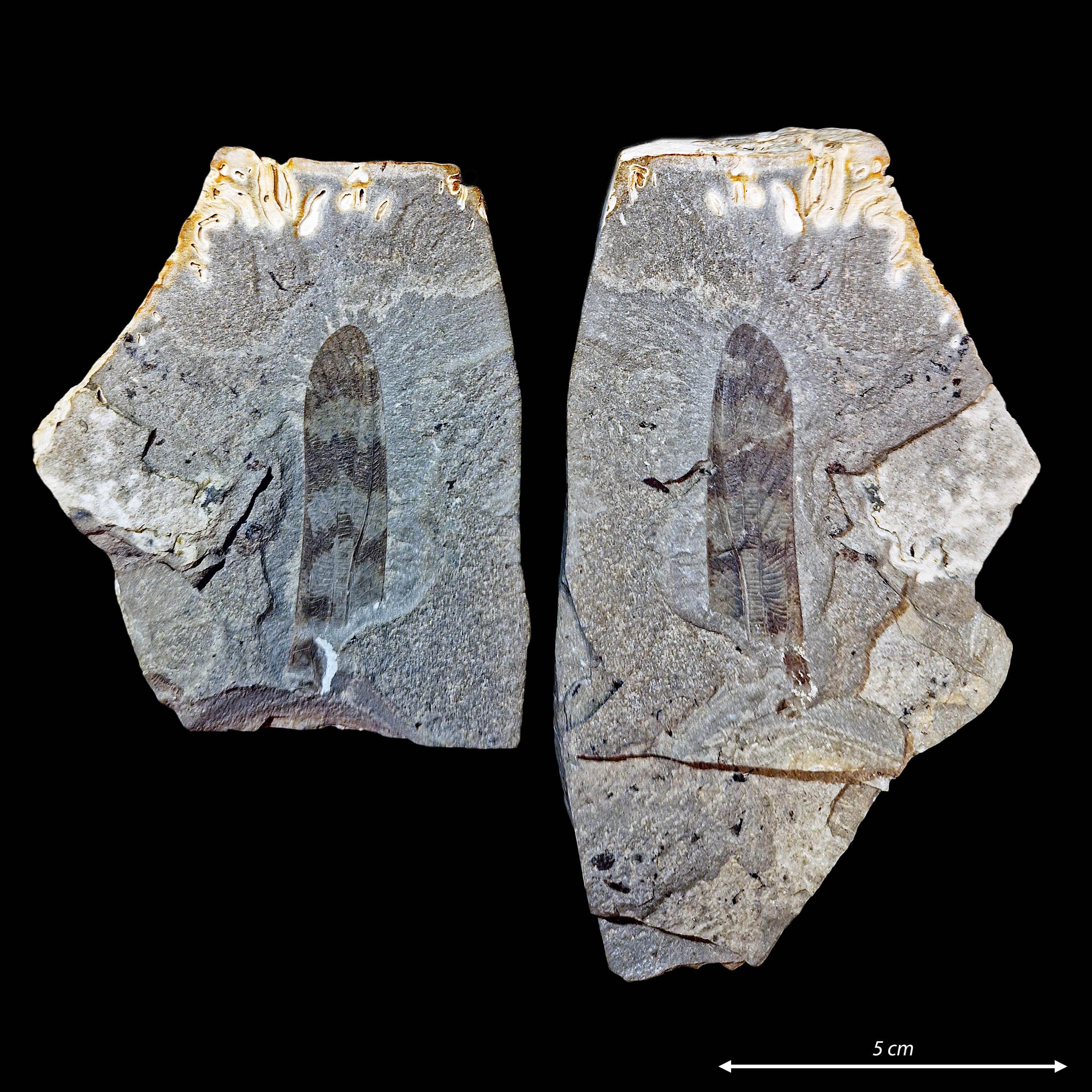
Venstre forvinge af løvgræshoppe Pseudotettigonia amoena DK 347 (Foto: Thomas Holm Scharling, MitFossil)
Strengths
Several hundred fossils of outstanding exhibition value, supporting valuable public outreach and mediation efforts in Denmark; or of national and international scientific value; or both (see examples in section "Highlighted specimens" below).
A number of extremely rare, articulated specimens of starfish from the Maastrichtian and Paleocene chalk and limestone deposits (including genera Crateraster, Metopaster, Nymphaster and Recurvaster). These specimens allow the reconstruction of the skeletal morphology of these animals in much more precise detail than previously known.
Securely-dated specimens of ammonites from earliest Paleocene limestones, documenting survival of this otherwise-thought extinct group for some time after the Cretaceous-Paleogene mass extinction event.
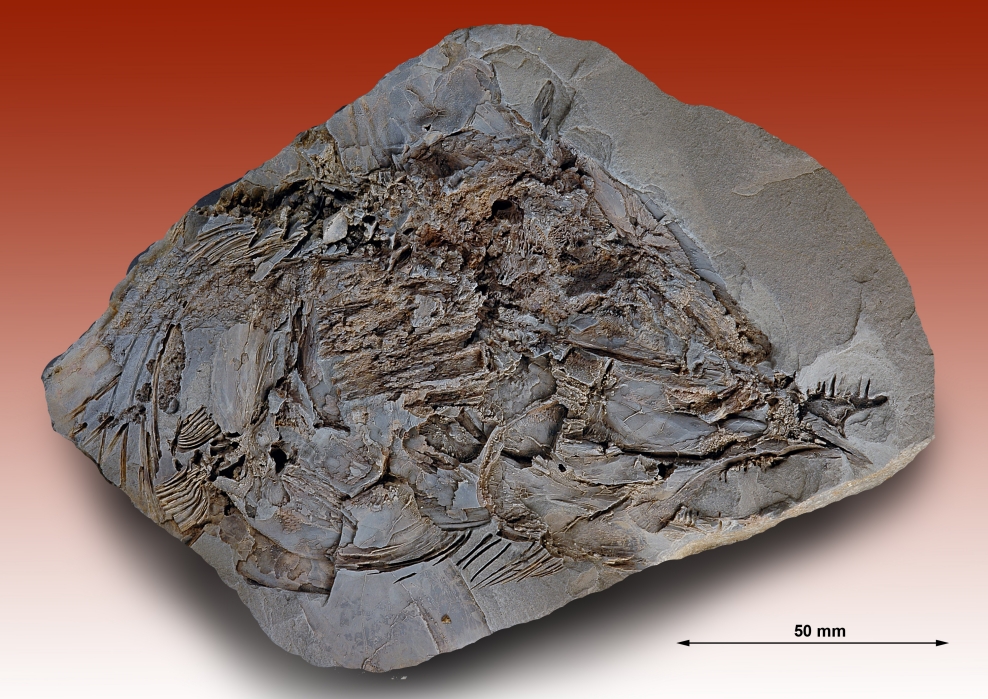
Extremely well-preserved specimens of lowermost Eocene fossil Osteglossomorphae, including the holotypes of Heterosteoglossum foreyi and Xosteoglossid rebeccae. These specimens document an unexpectedly high marine diversity among a group of fish, which nowadays are exclusively freshwater and only found in the southern hemisphere.
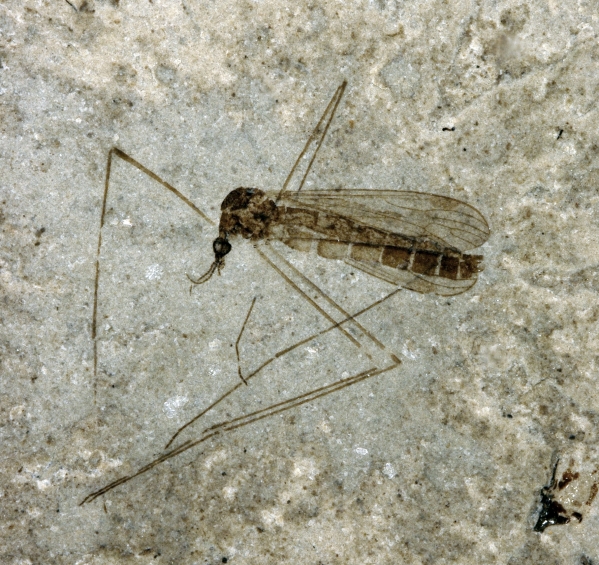
Fossil stankelben Tipula sp. DK 138 (Foto: Sten L. Jakobsen)
A large diversity of fossil insects from the latest Paleocene and earliest Eocene, many of which document the earliest occurrence of modern groups.
Fossil specimens of lowermost Eocene birds from the Fur Formation, including specimens of Eocypselus, Lithornis, Morsoravis (type), Rhynchaeites and Septentrogon (type). These exquisitely-preserved specimens are among the earliest well-dated fossils documenting a high diversity of Anatomically modern birds (Neornithes) and have contributed significantly as well-constrained dating points to molecular clock studies of bird evolution.
Fossil bird head with feather impressions from the lowermost Eocene (Danekræ DK 200), a key specimen which allowed the first correct identification and description of fossil melanosomes in fossil bird and dinosaur feathers.
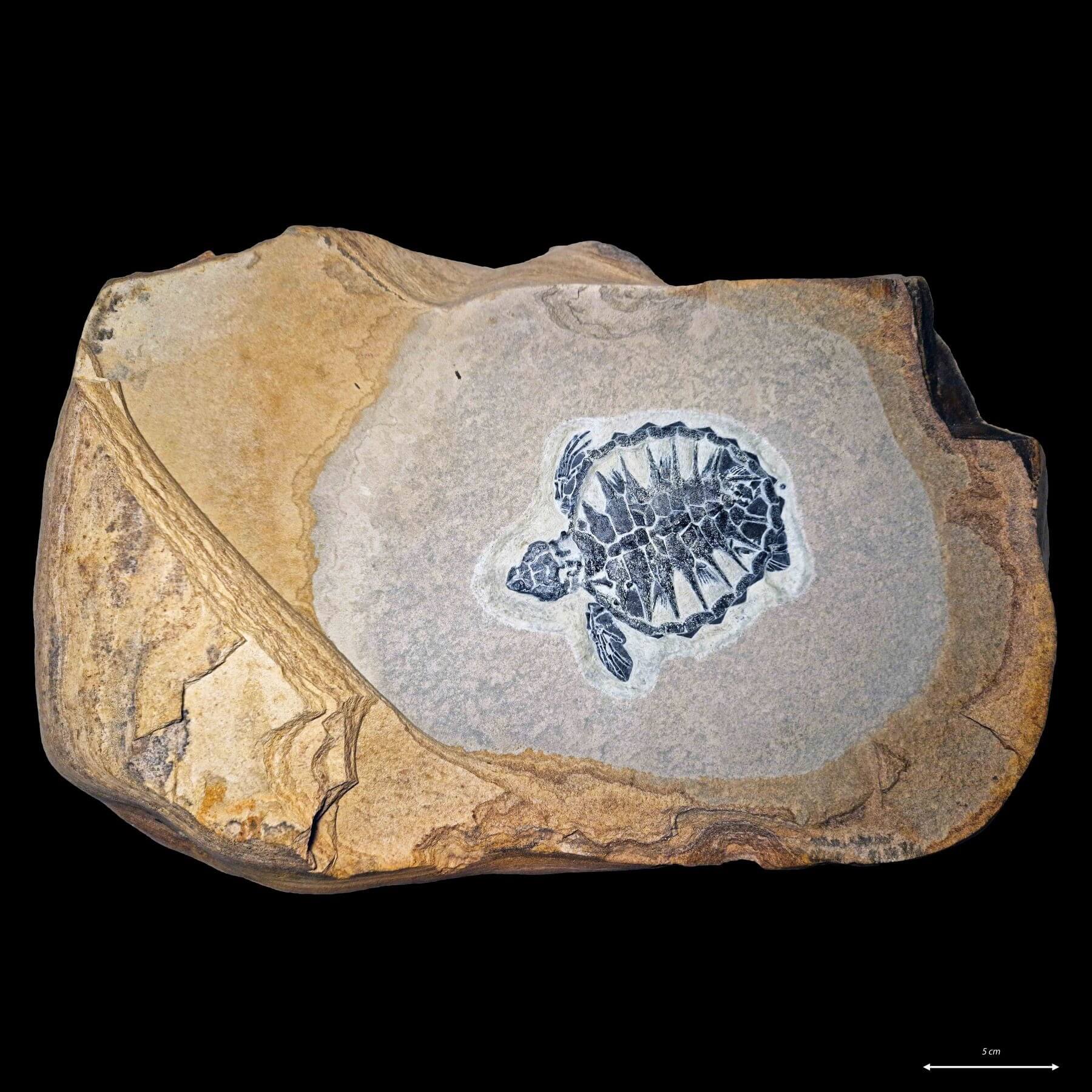
A complete juvenile sea-turtle referred to the new species Tasbacka danica, with soft tissue preservation and outstanding exhibitional value.
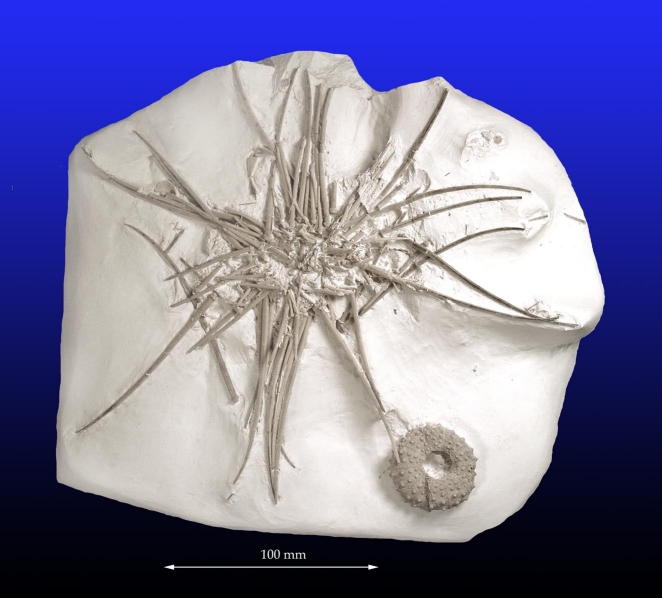
Fossil søpindsvin Phymosoma granulosum DK 154 (Foto: Sten L. Jakobsen)
The concept of Danekræ fossil trove was introduced during the revision of the Museum Legislation in 1989 by the Danish parliament. Existing legislation was expanded to secure the most important national natural history finds and specimens for the public.
Fossil trove belongs to the state of Denmark, and any person who finds or gains possession of an object that could be Danekræ, shall immediately deliver it to the Natural History Museum of Denmark, or one of the nationally recognized natural history museums.
The following objects can be declared Danekræ:
Rare or extremely well-preserved fossil remains of animals or plants
Rare animal skeletons or parts hereof from the Ice Ages or later
Meteorite finds or falls from Denmark
Mineral crystals of exceptional size or shape
Minerals and rocks with a rare composition or occurrence
To this date, more than 1000 specimens have been declared Danekræ fossil trove. By far most specimens in the collection are fossil remains of prehistoric animals and plants, but one rock and two mineral specimens have also been recognised. Three meteorite finds and falls have also been declared Danekræ, namely Maribo (2009), Ejby (2015) and Dueodde (2017).