
Danekræ
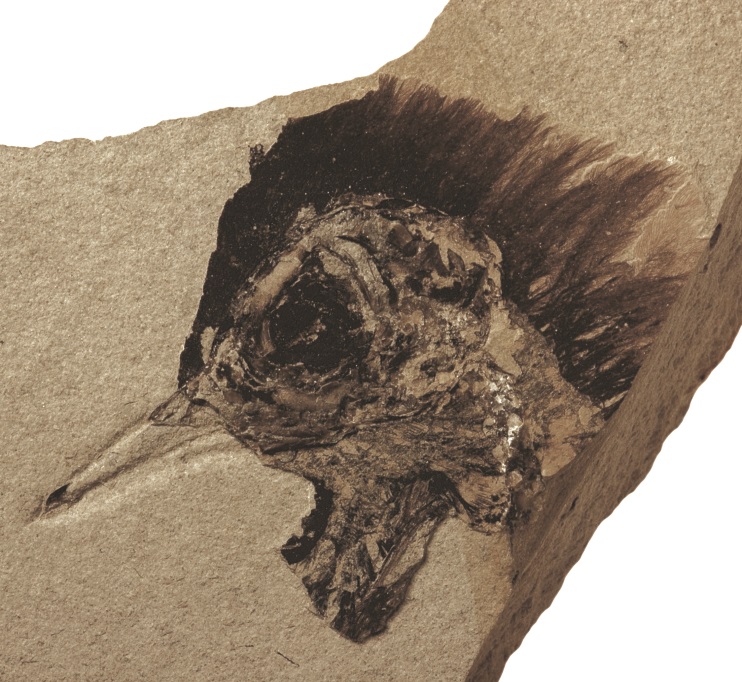
Danekræ fossil trove are natural history objects found in Denmark, with unique scientific or exhibition value: rare or extremely well-preserved fossils, animal skeletons from the Ice Ages, meteorites or minerals.
Fossil trove belongs to the state of Denmark, and any person who finds or gains possession of an object that could be Danekræ, shall immediately deliver it to the Natural History Museum of Denmark, or one of the nationally recognized natural history museums.
The finder of a Danekræ will receive a renumeration. The size of the renumeration depends on the scientific and exhibition value of the object.
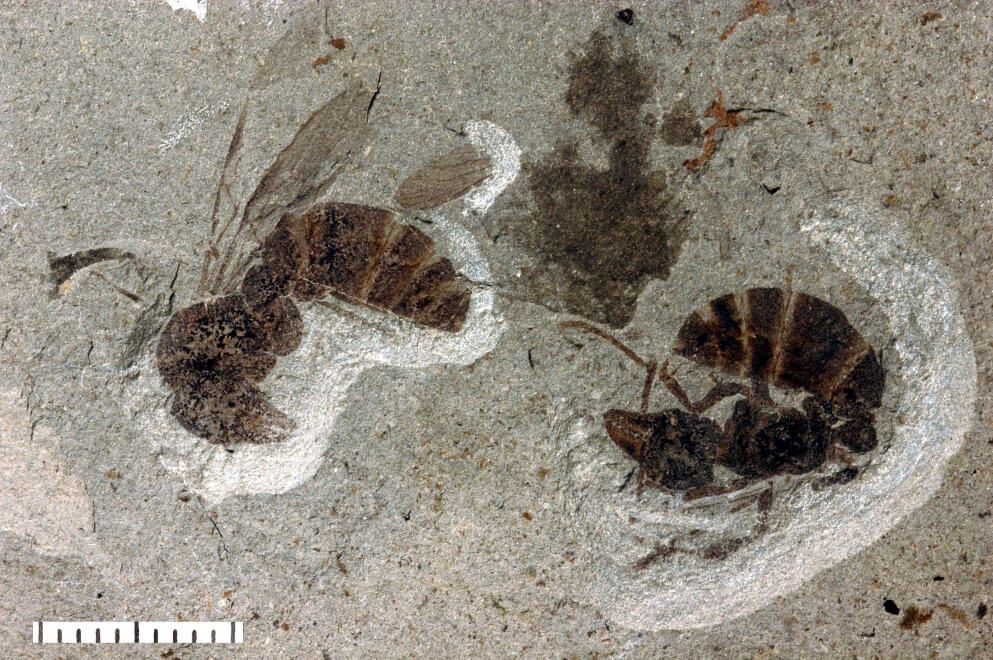
Fossile kæmpemyrer Ypresiomyrma rebekkae (Foto: Sten L. Jakobsen)
The concept of Danekræ fossil trove was introduced during the revision of the Museum Legislation in 1989 by the Danish parliament. Existing legislation was expanded to secure the most important national natural history finds and specimens for the public. Fossil trove legislation corresponds closely with those which have been in existence for more than 300 years concerning Danefæ, which are important national finds of archaeological or manmade artifacts.
The following objects can be declared Danekræ:
- Rare or extremely well-preserved fossil remains of animals or plants
- Rare animal skeletons or parts hereof from the Ice Ages or later
- Meteorite finds or falls from Denmark
- Mineral crystals of exceptional size or shape
- Minerals and rocks with a rare composition or occurrence
To this date, more than 1000 specimens have been declared Danekræ fossil trove. By far most specimens in the collection are fossil remains of prehistoric animals and plants, but one rock and two mineral specimens have also been recognised.
Three meteorite finds and falls have also been declared Danekræ, namely Maribo (2009), Ejby (2015) and Dueodde (2017).
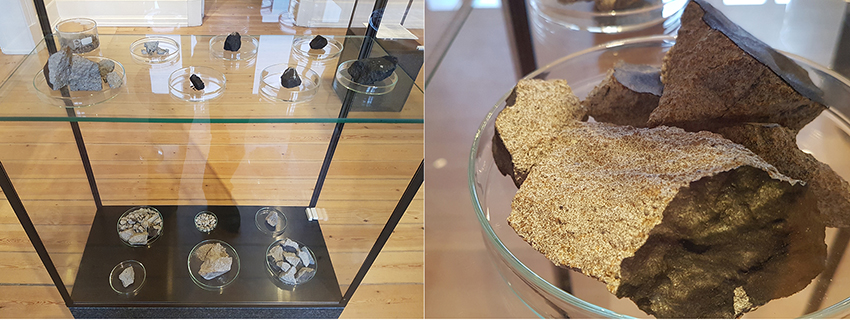
Stykker af Ejby meteoritten DK 870 (Foto: Sten L. Jakobsen)
Have you found a natural history object that you think might be Danekræ? Follow the steps below!
- Note down as many details as possible about the object and the find location.
- Contact Natural History Museum Denmark or another government-recognised natural history museum. TIP! You can use mitfossil.dk to have your find identified by an expert.
- The museum will make an initial assessment of the object. If it has potential to be declared Danekræ, the object should be handed over to the museum. The museum and finder fill out a Danekræ submission form, which is delivered to the Danekræ committee. The finder receives a copy of the submission form as confirmation of the submission. If you are not able to deliver the object to a government-recognised natural history museum, please contact Ida Bonnevier Wallstedt for guidance about sending the object to the museum.
- The object is evaluated by the Danekræ committee, with the help of relevant experts in the field. The Danekræ committee decides if the object is to be declared Danekræ, and what the size of the renumeration should be.
Please note: The Danekræ committee receives many potential Danekræ and the wait time for an object to be assessed is currently 6-12 months. If a potential Danekræ is rejected, it is returned to the finder without any postal fees. - If a potential Danekræ is rejected, it is returned to the finder without any postal fees. The finder can also choose to donate the specimen to Natural History Museum Denmark, or to a local natural history museum.
List over natural history museums in Denmark which can receive potential Danekræ:
- Fiskeri- og Søfartsmuseet, Esbjerg
- Fossil- og Molermuseet, Nykøbing Mors
- Museum Salling, Fur
- Natural History Museum Denmark, Copenhagen
- KALK, Østsjællands Museer, Faxe
- Det Grønne Museum, Auning
- Museum Sønderjylland Gram Lergrav – Palæontologi, Gram
- Naturama, Svendborg
- Naturhistorisk Museum, Aarhus
- If the museum can immediately determine that the object is not Danekræ, the object may be returned to the finder. The finder may also donate the object to the museum if they wish to do so.
- If the museum thinks that the object could be Danekræ, the object should be handed over to the museum.
- The museum and the finder fill out the Danekræ submission form. The form is sent to the Danekræ committee, and the finder receives a copy of the submission form as confirmation of submission.
- The museum ensures that the object is delivered to the Danekræ committee at Natural History Museum Denmark.
Please note that the object belongs to the finder until it has been approved as Danekræ. Therefore, preparation may not be carried out without the permission of the finder. Preparation should only be carried out when it is neccessary in order to assess if it should be delivered to the Danekræ committee. <(p>
The Danekræ committee is appointed by the Natural History Museum of Denmark. They decide if submitted specimens should be declared Danekræ. The committee convenes three to four times a year to evaluate potential Danekræ specimens. They also decide on the size of renumerations for the finds.
The committee consists of Danish palaeontological experts, who also draw on their large network of national and international experts for the evaluations. The committee consists of:
Chairperson
Laura Jane Cotton, associate professor and curator of palaeontology, Natural History Museum Denmark, University of Copenhagen
laura.cotton@snm.ku.dk
Secretary
Ida Bonnevier Wallstedt, Collection manager for vertebrate palaeontology and Danekræ, Natural History Museum Denmark, University of Copenhagen
ibw@snm.ku.dk
+45 21 84 96 99
Members
- Jakob Vinther, associate professor, School of Earth Sciences, University of Bristol
- Jan Audun Liljeroth Rasmussen, museum inspector, Fossil- og Molermuseet, Museum Mors
- Jesper Milàn, museum inspector, KALK, Østsjællands Museer
- Mette Elstrup, unit leader Naturhistorie, Gram Lergrav – Palæontologi, Museum Sønderjylland
- René Lyng Sylvestersen, museum inspector, Museum Salling
While the Danekræ fossil trove collection is physically housed and formally registered at the Natural History Museum of Denmark, many specimens are on long-term display at local natural history museums around Denmark, usually closely associated with the localities they were discovered in. Specimens are also routinely on loan for special or temporary exhibits.
MitFossil
MitFossil is a community for fossil finders to help each other find, register and identify fossils found in Denmark, so that we all can learn more about ancient biodiversity.
It’s also a place to gain inspiration and knowledge about geology and fossils.
Link to MitFossil.