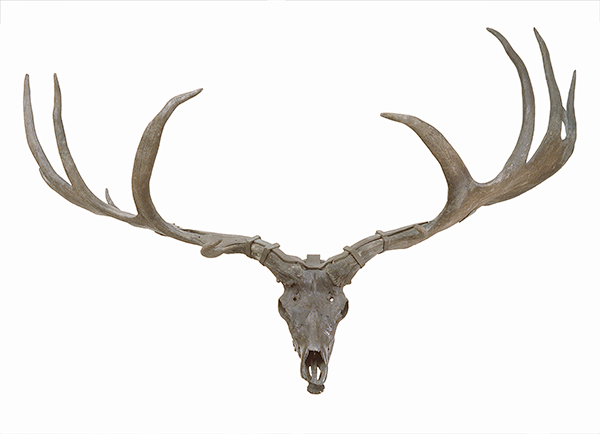
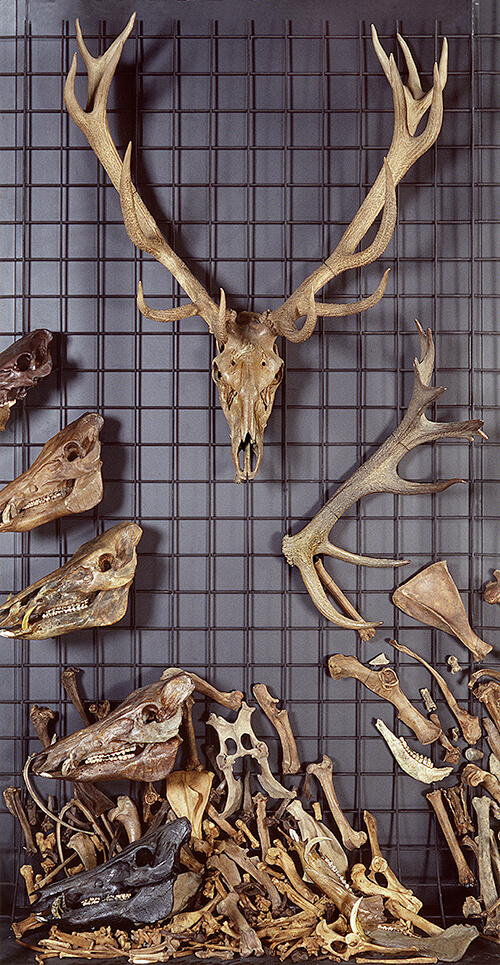
Quaternary Zoology & Geology Collections
Curator
Collections Manager
About the collection
The Quaternary Collection at the Natural History Museum of Denmark (NHMD) comprises animal skeletal remains from the last ~2.6 million years. The museum is the principal repository for the majority of zooarchaeological material excavated in Denmark and holds major faunal collections from Greenland. The museum works closely with the museums responsible for excavating the material (“owner” or “owning museum”).
The Quaternary collections comprise material primarily from Denmark and Greenland, complemented by historic collections from Brazil and Argentina, as well as other foreign localities. Spanning mainly the Late Ice Age to the present interglacial period, the collections consist chiefly of animal skeletal remains and fossil invertebrates, alongside smaller holdings of sediments and soils. As a research resource, these collections underpin studies of climate and environmental change, ice-age cycles and interglacials, the domestication of animals, and long-term hunting and herding practices, while also contributing to museum-based research, teaching, and exhibitions.
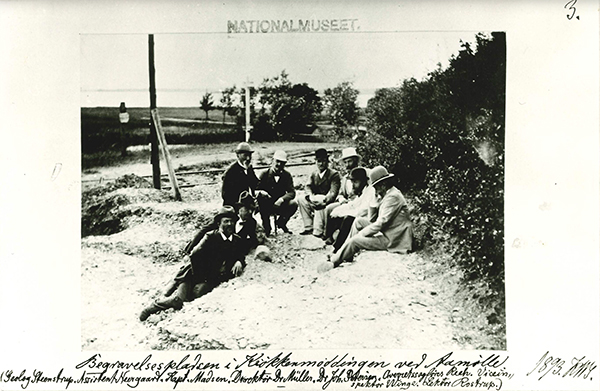
The Quaternary collections were established in the 19th century through the work of Japetus Steenstrup, but they originated from scattered specimens collected as early as the 17th century. Steenstrup studied faunal and floral remains from bogs, divided the Holocene into four periods based on tree species, and helped integrate archaeology with natural science. His successors, including Herluf Winge, Magnus Degerbøl, and Ulrik Møhl, greatly expanded the collections and developed extensive comparative skeletal series. In the mid-1800s, recognition of repeated ice ages and Denmark’s Quaternary-dominated surface geology fostered close collaboration among geologists, botanists, and zoologists that helped to further establish and grow the collections.
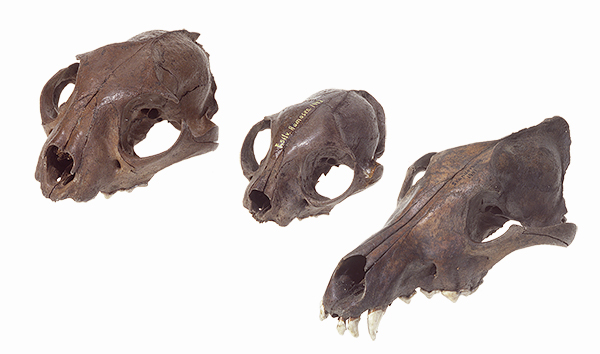
The Danish Faunal Collection comprises material from archaeological and geological sites across Denmark. The collection spans from the Eemian interglacial and the Weichselian glaciation to the Holocene. Faunal remains from archaeological sites from around Denmark are the largest component of the collection and provide insight about animal domestication and immigration. The collection also has re-deposited remains of large herbivores such as woolly mammoth and reindeer. Some reindeer bones show butchery marks and represent the earliest evidence of humans in Denmark, associated with the Hamburgian culture.
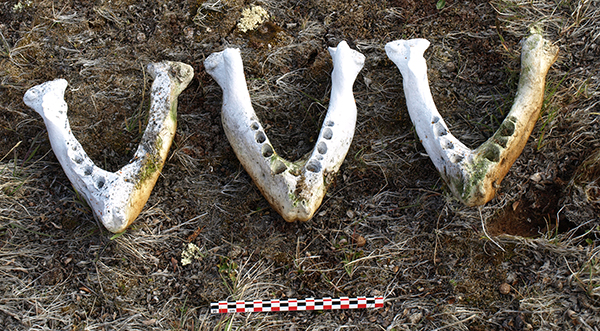
In agreement with the Greenlandic National Museum, the Natural History Museum of Denmark is the current custodian of all zooarchaeological material originating from Greenland. This collection derives from archaeological and geological excavations dating back to the 18th century. The collection grew through systematic excavations in the late 19th century Norse and Paleo-Inuit faunal material, representing Saqqaq and Dorset cultures. The collection consists mainly of mammal and bird remains and provides a record of long-term human–animal relationships in the Arctic.

The South American Faunal Collection originates from the 19th-century and comes from two major sources: an expedition led by Peter Wilhelm Lund to cave sites in Minas Gerais, Brazil, and from fossil purchases made by Valdemar Lausen, a Danish medical doctor who was living in Buenos Aires. The collections span the Mid- to Late Pleistocene and Holocene. The Brazilian material consists largely of small vertebrates, with some megafauna, including type specimens and limited human remains. The Argentinian material is dominated by Pleistocene megafauna. Together, the collections represent major mammal groups such as Rodentia, Xenarthra, and Carnivora, in addition to approximately 100,000 large-vertebrate bones, 2.5 million small-vertebrate bones, and around 1,300 breccia blocks with unprepared fragments.
For more information, click here.
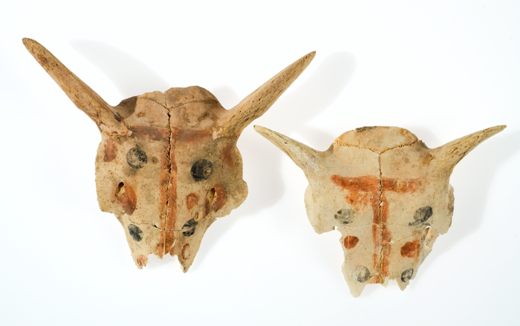
The Foreign Collections include faunal material from archaeological sites around the world, developed primarily through international collaborations. The collections span the Neolithic, Bronze Age, Iron Age, and Islamic periods. They consist mainly of vertebrate remains from Western and Southeast Asia, including Jordan, the United Arab Emirates, Iran, and Thailand, as well as notable material from Canada, Alaska, and Sudan.
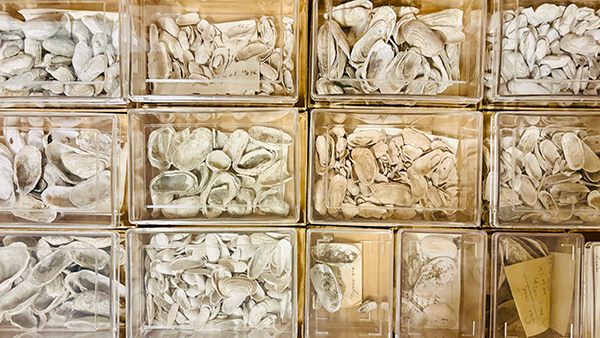
The Quaternary collection also houses subfossil mollusc shells, plant remains, and sediments from Denmark, Greenland, and other regions. The material spans four ice ages and three interglacials, with Greenlandic marine and terrestrial remains extending back to the Early Pleistocene. Marine and freshwater molluscs, late-glacial and Holocene plant remains from Denmark, and early Quaternary wood from Greenland form the core of the collection. Smaller sediment collections support research into ice-age cycles and postglacial environmental change, as well as teaching and exhibitions.
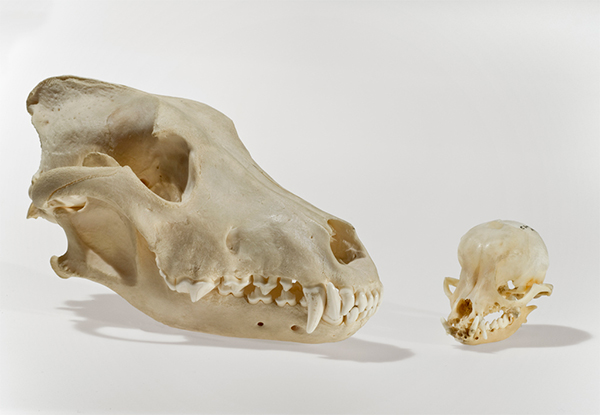
- Comparative collection of recent wild and domesticated species
- Recent Gute sheep collection
- Faunal remains from the joint Scandinavian Expedition to Sudanese Nubia
- Type material and early human remains from Lagoa Santa, Brazil
- Nearly complete Glyptodon and Mylodon skeletons from Argentina
- Cranial and post-cranial material of Danish aurochs
- Dried peat documenting Holocene environmental change in Denmark
- Early Quaternary marine fauna from West Greenland
- Tertiary–Quaternary invertebrates from Iceland
- Early Holocene faunas from the Swedish west coast
- Travertine plant remains documenting tundra-to-forest transition
How to use the collection
General Inquiries: Contact the collections manager, Anna Jerve – aj@snm.ku.dk.
Collections visits, sampling or loan requests: Review the guidelines for using the zooarchaeological collection and submit your project description below.
Depositing Material in the Quaternary Zoology Collection: Submit your material information using the form below.
- Complete the application form below and send it to the curator and collections manager.
- Review Process:
The application will be considered by the Quaternary Zoology group. - Notification:
The curator or collections manager will notify the applicant about their the status of the application and provide further instructions or a member of the Quarternary Zoology group will reach out if there are any questions . - Permission from Other Institutions (if applicable):
- If the requested material is owned by another institution, the applicant must obtain written permission from that institution.
- This step may take time due to coordination between the Natural History Museum of Denmark (NHMD) and the owning institution.
- Submit written permissions through the permissions form.
- Scheduling Sampling:
Once permissions are approved, the collections manager will contact the applicant to schedule sampling.
General:
- Sampling and loans can only be requested by those with an official affiliation with an institution or organization.
- Students may apply for visits, sampling, and loans, provided they have the support of their direct supervisor, who agrees to take responsibility for the material.
Application:
- Complete the appropriate form and send it to the collections manager at least 3 months in advance.
- Response time will vary based on the request. The application review process may take up to 3 months.
Permissions:
- Sampling material from the Quaternary Zoology Collection requires permission from the Natural History Museum of Denmark (NHMD) and the owning institution.
- Submit written permission under “Permissions Submission”.
Arranging Sampling:
- Once approved, all sampling must be arranged through the collections manager.
- Sampling is performed by NHMD staff.
Sample Handling:
- Any remaining sample material must be returned to NHMD and cannot be used for any other analysis than the analysis mentioned in the sampling application.
Publication of Results:
- Results must be published or reported to NHMD within 3 years as a link or pdf attachment. If results take longer, contact the collections manager
- If results are not published within 3 years, NHMD reserves the right to use the results in its own research.
- Report results to NHMD using the “Permissions & Results” link below.
Acknowledgment and Authorship:
- Sampling of material incurs a charge and NHMD must be acknowledged as a contributor to published work.
- Authorship for NHMD staff will be considered if their contribution exceeds standard sampling work and will be discussed during the project.
Datasets:
- Any datasets used to conduct the analysis must be provided to the museum within 3 years as either raw data or a link to a public data repository where it can be viewed and/or downloaded. This includes any kind of 2- or 3D imaging and DNA or age dating analyses.
- These materials will be held in quarantine by the museum for 3 years or until the data for the analysis are published.
- Dispensation for projects that take longer than 3 years will be given but must be discussed with the collections manager.
Use of Data:
- NHMD reserves the right to include results in museum documentation systems and to use the data in other research contexts.
The cost of sampling will depend on the amount of assistance needed to identify and locate the appropriate faunal material and thus the amount of hours spent by NHMD staff. Contact us for further detail.
Personal data provided in the forms will be processed in accordance with the EU General Data Protection Regulation (Regulation (EU) 2016/679). The data will be used solely for the purpose of administering and managing applications for access to the museum’s scientific collections, specimen sampling and for related administrative and record-keeping purposes. Processing is carried out on the basis of a task performed in the public interest and/or the legitimate interests of the institution. Access to personal data is restricted to authorised staff and will not be shared with third parties without lawful reasons. Personal data will be retained only for as long as necessary. You have the right to access, rectify, restrict, or object to the processing of your personal data, and to lodge a complaint with a relevant supervisory authority.
Links to submission forms